top of page


Portfolio
With nearly three decades of experience in the rail industry, Damon Snell has built a reputation for leading complex, high-impact programmes that drive safety, performance, and innovation. This portfolio highlights two standout projects that reflect his hands-on leadership, strategic thinking, and ability to deliver lasting change from transforming driver training for digital rail operations to reshaping national control systems during one of the most demanding periods in UK transport history.
Each case study showcases Damon’s ability to bridge technical expertise with operational excellence, delivering results that have set new benchmarks across the industry.
Case Study: ETCS Driver Training Academies
Client: Freightliner
Programme: East Coast Digital Programme (£2bn)
Role: ERTMS Business Change Manager
As part of the UK’s landmark East Coast Digital Programme (ECDP), Damon Snell led the design and delivery of two advanced ETCS Driver Training Academies for Freightliner. These academies were built to prepare freight train drivers for the introduction of in-cab signalling using the European Train Control System (ETCS) and became national benchmarks for freight operator training.
Context & Challenge
Freightliner faced a significant operational and technical shift as the East Coast Main Line transitioned to digital in-cab signalling. With over £2 billion allocated to this modernisation effort, Freightliner needed to rapidly upskill its workforce, requiring entirely new training infrastructure and governance. The challenge: build high-fidelity, scalable training environments to ensure driver competence and safety under the new system.
Damon’s Approach
Appointed as Freightliner’s ERTMS Business Change Manager, Damon took charge of the initiative from inception to rollout. He:
-
Authored the strategic business case and secured ECDP funding.
-
Led procurement and commercial negotiations, securing eight desktop simulators and two full-cab replica simulators from CORYS.
-
Designed two state-of-the-art academies in Ipswich and Doncaster, each with identical simulator setups to ensure consistency and training parity across regions.
-
Negotiated complex agreements with ROSCOs to support ETCS fitment on over 180 locomotives, aligning technical requirements with operational and safety needs.
Outcomes & Impact
-
Operational Readiness: Freightliner’s drivers completed simulator-based training ahead of deployment, ensuring a smooth transition to ETCS operations.
-
Safety & Efficiency: The academies reduced on-track training time, lowered operational risk, and improved environmental outcomes through more efficient traffic management.
-
Industry Leadership: The Ipswich and Doncaster academies have been widely recognised by peers and the press, setting the standard for ETCS training across the UK freight sector.
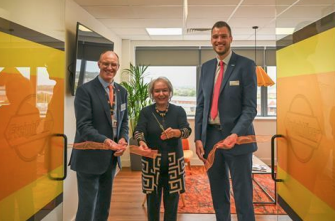
Visual Assets
Available from:


Case Study: Operational Leadership at Anglia Integrated Control Centre (AICC)
Client: Network Rail
Role: Head of Control
Scope: 15% of UK Rail Network + London 2012 Olympics
During his tenure as Head of Control at Network Rail’s Anglia Integrated Control Centre (AICC), Damon Snell redefined operational performance and disruption management for one of the UK’s most complex rail regions. Responsible for real-time control of 15% of the national rail network, Damon delivered sustained performance improvements, cost efficiencies, and strategic resilience—culminating in the flawless delivery of transport during the London 2012 Olympic Games.
Context & Challenge
When the AICC opened in 2011, it unified multiple signalling, planning, and control systems across the Anglia route, covering major commuter and freight lines from Ipswich and Norwich to London Liverpool Street. However, the integration exposed gaps in governance, decision-making, and disruption recovery. With London 2012 approaching, pressure mounted to resolve these issues under intense public and political scrutiny.
Damon’s Approach
Damon implemented a ground-up transformation, blending operational leadership with systemic reform:
-
Control-Centre Reorganisation: He restructured internal teams and decision pathways, embedding a “One-TOC” mindset that unified Network Rail and Train Operating Companies under common goals.
-
Policy Innovation: He authored and implemented the UK rail industry's first formal Service Management & Recovery Code, later adopted nationally as the SR2013 Approved Code of Practice.
-
Data-Driven Improvement: Introduced real-time dashboards and regular “pulse checks” to identify and target root causes of delay.
-
Olympic Transport Lead: Appointed national lead for control centre operations during London 2012, he coordinated Olympic route strategies with Transport for London, train operators, and emergency services.
Outcomes & Impact
-
Top National Performance: The Anglia route achieved over 95% on-time performance for 13 consecutive months, the best in the country.
-
Operational Cost Savings: The reorganisation delivered significant OPEX reductions, unlocking resources for long-term investments.
-
Faster Incident Recovery: Implementation of the recovery code cut average disruption-to-recovery times by an estimated 30%, as later cited in an ORR enforcement review.
-
Olympic Excellence: London 2012 transport saw no major disruptions on key Olympic routes, earning industry-wide praise and showcasing Damon’s leadership at national scale.
Visual Assets
Available from:
-
East Suffolk Lines (AICC imagery)
-
Network Rail Media Centre
-
London 2012 Transport Plan visuals
-
Getty Images / Olympic Authority


bottom of page